Los esteroides anabólicos son compuestos sintéticos que imitan la hormona masculina testosterona. Se utilizan con frecuencia en el ámbito deportivo para aumentar la masa muscular, mejorar el rendimiento físico y acelerar la recuperación tras lesiones. Sin embargo, su uso conlleva riesgos y es importante informarse bien antes de decidir comprarlos.
La tienda de farmacología deportiva muscleshopspain.com valora la confianza de sus clientes y ofrece solo esteroides anabólicos comprobados con garantía de éxito.
Aspectos a Considerar Antes de Comprar Esteroides Anabólicos
Al momento de considerar la compra de esteroides anabólicos, hay varios factores a tener en cuenta para garantizar una experiencia segura y efectiva:
Investigación y Conocimiento: Infórmate sobre los diferentes tipos de esteroides, sus efectos secundarios y cómo afectan el cuerpo.
Calidad del Producto: Asegúrate de adquirir productos de marcas reconocidas y con buenas críticas. Opta por tiendas que ofrezcan lab tests o certificaciones de calidad.
Legalidad: Verifica las leyes locales relacionadas con la compra y uso de esteroides anabólicos, ya que en algunos países su uso es ilegal sin prescripción médica.
Objetivos y Dosis: Define claramente tus objetivos y cómo planeas usar los esteroides, y considera consultar a un especialista que pueda guiarte en la dosis adecuada.
Efectos Secundarios: Ten en cuenta que el uso de esteroides anabólicos puede provocar efectos adversos graves, como alteraciones hormonales y problemas cardiovasculares.
Conclusión
Comprar esteroides anabólicos puede parecer una solución rápida para mejorar el rendimiento físico, pero es vital hacerlo de manera informada y responsable. Siempre prioriza la calidad y la legalidad, y no dudes en buscar asesoría profesional para maximizar los beneficios y minimizar los riesgos.
🛠 Hash code: 1cade10036ee0b65e186c1420a2925c1 Last modification: 2026-05-07
Processor: 1 GHz CPU for patching
RAM: Needed: 4 GB
Disk space: 64 GB required
Topaz AI is a suite of AI-powered tools for enhancing the quality of images and videos: upscaling, denoising, sharpening, masking, and color correction using machine learning. Uses AI to enhance photos and videos, including upscaling and noise reduction. Utilizes deep learning algorithms to sharpen images and reduce noise. Available as both plugin and standalone app. Ideal for photographers, video editors, restorers, and archival Professionals. Designed for rapid enhancement with minimal visual distortion.
Product key tool for OEM and enterprise editions
Topaz AI Portable + License Key [Lifetime] (x86x64) Clean FREE
License key manager supporting backup and restore
Topaz AI Portable + Activator Latest Lifetime FileCR
Key generator with smart detection of software version
Topaz AI sharpen Cracked [Patch] [x64] [Stable] Genuine FREE
Product key utility for expired licenses
Topaz AI 2025 Portable exe [Stable] [x32-x64] [100% Worked] Verified
Patch installer ensuring permanent removal of activation
Topaz AI gigapixel Crack + Keygen no Virus [Lifetime] Ultimate FREE
Make the most of what your career has to offer with a Master’s in Management from Hult. To learn more, take a look at our blog How volunteering prepared me for business school, or give www.asian-feels.com your employability a huge boost with an MBA in international business. Download a brochure or get in touch today to find out how Hult can help you to explore everything about the business world, the future, and yourself.
This approach helps in grasping how various cultures rely on and interpret these forms of communication, enhancing understanding and effectiveness in multicultural settings. Research shows that nonverbal cues can influence up to 93% of our communication, while verbal messages account for only 7%. Understanding and mastering nonverbal communication can help you build stronger relationships, improve your public speaking skills, and even enhance your job performance. What gestures, facial expressions, or physical contact mean in one culture may be very different, even offensive, in another. It’s essential to consider the cultural context and intent behind a gesture when evaluating its potential offensiveness.
Some cultures expect more formality and still value respectful gestures, even virtually. Slouching, fidgeting, or looking away too often may be seen as disengaged or unprofessional, so it’s important to remain mindful of your non-verbal cues during digital interactions. By embracing cultural diversity and improving our awareness of non-verbal signals, we can foster more meaningful interactions in our personal and professional lives. Discover the fascinating realm of nonverbal communication across diverse cultures in this comprehensive guide.
Challenge: Professional Communication Can Be Misinterpreted Or Difficult To Understand Across Languages And Cultures
Observe how others behave in meetings or social settings, and mirror their style in a respectful way. Training programs on cultural competence and emotional intelligence are also helpful. Most importantly, ask questions when appropriate—showing curiosity and respect for cultural differences builds stronger, more authentic connections. Embracing cultural diversity in communication fosters mutual respect, reduces misunderstandings, and enriches personal and professional interactions. By enhancing our awareness of non-verbal cues and employing strategies for effective cross-cultural communication, we can create a more inclusive world that celebrates diversity.
Moreover, the communication process provides a platform for individuals to express their thoughts, emotions, and experiences. It serves as a medium for self-expression, enabling individuals to share their perspectives and joys with others. The communication process consists of several interconnected components that work together to facilitate effective communication.
Why Is Low-context Communication Important In Global Business?
Explicit communication enhances efficiency in teamwork and decision-making by setting clear expectations and instructions. Studies show organizations with high levels of explicit communication experience improved productivity and reduced errors. Accenting is a form of nonverbal communication that emphasizes a word or a part of a message. The word or part of the message accented might change the meaning of the message. Your professors likely pause just before relaying information that is important to the course content.
Cultural differences in non-verbal communication present both challenges and opportunities for effective interaction in a globalized world. By understanding the nuances of body language, gestures, and facial expressions across cultures, we can improve our communication effectiveness and build stronger relationships. There are several challenges when interpreting nonverbal communication with different cultures. One of the biggest obstacles that can be found in cultural bias, which is the tendency to judge other people’s behavior based on how it matches up to your own culture. For example, someone from the U.S might assume that direct eye contact signifies confidence and honesty, while another culture might find that intense or sometimes disrespectful. These cues are not taught; you have to learn to recognize them and learn to interpret them on your own.
Implementing these strategies can help navigate the complexities of nonverbal communication in different cultures, ensuring respectful and effective cross-cultural interactions.
In our increasingly globalized world, effective cross-cultural communication is pivotal for fostering understanding and collaboration.
For example, maintaining eye contact, using open and relaxed body language, and smiling can help to establish a positive and welcoming atmosphere.
Cultures can therefore be placed on a continuum of high-context to low-context cultures based on how important implicit information is in communication in that culture. In addition to this, gestures too can have different meanings in different cultures. In Western cultures, a smile is often seen as a sign of happiness or pleasure. However, in some Eastern cultures, a smile can also be used to hide sadness or anger. In Western cultures, pointing is a common way to indicate something or someone.
Clear messages reduce misunderstandings and increase engagement in verbal and written interactions. Techniques such as simple language, concise wording, and structured delivery improve clarity. Studies show that clear communication boosts organizational productivity by up to 25%.
Many Middle Eastern cultures prefer gentler handshakes, interpreting excessive firmness as aggressive or disrespectful. The emphasis is on respectful acknowledgment rather than strength demonstration. Many Middle Eastern, South Asian, and parts of African cultures restrict public physical affection, even between married couples. These restrictions stem from religious teachings, traditional values, or legal frameworks that prioritize public modesty. Vertical head nodding indicates disagreement or refusal, while horizontal head shaking signals agreement.
Despite our tendency to lose sight of our similarities and, instead, to highlight our differences, “the majority of people in the world want to get along,” says Matsumoto. That’s when our non-verbal abilities can help us to better relate to other members of our human family. Your body language, eye contact, facial expressions, and tone of voice often communicate more than your words. Research consistently shows that nonverbal cues significantly impact how others perceive your message.
If someone steps back during conversation, they might be seeking comfortable distance rather than ending the interaction. International business meetings must account for these comfort level differences. Seating arrangements, standing conversations, and even presentation positioning should consider cultural space preferences. Many Asian cultures consider Western-style beckoning (upward-facing palm, fingers curling) appropriate only for animals. East Asian cultures prefer open-handed gesturing or subtle directional indicating rather than direct pointing. In Japan, this gesture indicates money or financial transactions—useful in business contexts but potentially confusing in casual conversation.
Benefit: Greater Opportunity For Personal And Professional Growth
We have learned through research that this “myth” is not necessarily true; this myth does tell a story about how our culture views nonverbal communication. That view is simply that nonverbal communication is important and that it has meaning. A particularly challenging aspect of nonverbal communication is the fact that it is ambiguous. It would be wonderful if crossing one’s arms signaled one meaning, but think about the many meanings of crossing one’s arms. An individual may have crossed arms because the individual is cold, upset, sad, or angry. It is impossible to know unless a conversation is paired with nonverbal behavior.
When you want to persuade or influence a person, mirroring can be an effective way to build rapport. Salespeople who use this with prospective clients pay close attention to them and they listen, observe, mimic with positive results. If a person repeatedly touches your arm, places a light hand on your shoulder, or knocks elbows with you, the person is attracted to you and is demonstrating this with increased touch. People interested in each other smile more, and their mouths may even be slightly open. A person who leans towards you or mirrors your body language is also demonstrating interest. These physical accents can create reactions—gaffes, miscommunications, humor, and offense—provisional to culture.
Cross-cultural understanding, along with local market knowledge, lends itself the production of more effective marketing strategy and materials. For example, high quality and culturally sensitive translations of websites, brochures, and other assets are essential. For example, uncrossing your arms can signal openness, while maintaining a relaxed posture conveys confidence. Freezing in place, rocking back and forth, and contorting into a fetal position are all known as “reserved behaviors,” as they are used only when a person experiences extreme stress. Facial expressions alone can signal this state, such as pursing or sucking in the lips, often seen when a person is upset or feels contrite.
Market-specific knowledge and insight is invaluable when it comes to for imagery and design, too. What might work well on a billboard for a British company could fail or offend elsewhere. A memorable McDonalds print ad in Finland may have been considered clever locally, but it was seen as confusing and even grotesque by foreign audiences. When you’re stressed out, touching or stroking the neck signals a pacifying behavior. The fleshy area under the chin has nerve endings and stroking it lowers heart rate and calms us.
If you’re like the majority of people nowadays you might be curious about learning to play casino online. Online gambling has become very popular in the last few years, with millions of Americans taking part in casinos online. Internet gambling is permitted in many states and is acknowledged as a form of gambling by the IRS. A number of states have (more…)
Slot video games have been a prominent form of entertainment for years. With the advancement of modern techno poker con bonus senza depositology, these games have changed right into on the internet versions, making them easily available to a bigger audience. Among the greatest benefits (more…)
The Role of Interpol in Issuing International Arrest Warrants
Interpol, the International Criminal Police Organization, plays a vital role in global law enforcement. One of its significant functions is the issuance of international arrest warrants. These warrants facilitate the collaboration between countries in apprehending fugitives who evade justice across borders. A clearer understanding of how Interpol operates and the legal implications of international arrest warrants is crucial for both law enforcement agencies and the general public. In this exploration, we will analyze Interpol and international arrest warrant processes, their significance, and their limitations.
Understanding Interpol
Founded in 1923, Interpol is the world’s largest international police organization, with 195 member countries. Its mission is to facilitate international police cooperation and combat transnational crime. Interpol provides a range of services, including databases for sharing crucial criminal information, operational support for investigations, and various legal resources to streamline collaboration among member nations. Despite its influential role, it is essential to recognize that Interpol itself does not have the authority to make arrests; it serves as a conduit for information sharing and coordination.
International Arrest Warrants Explained
An international arrest warrant is a legal document issued by law enforcement authorities to seek the detention of an individual who is accused of committing a crime and has fled the jurisdiction where the crime occurred. This type of warrant is particularly important in situations where a suspect crosses international borders to avoid prosecution. The use of international arrest warrants is governed by various international treaties and agreements, which stipulate how and when these warrants can be executed.
The Role of Interpol in Issuing Arrest Warrants
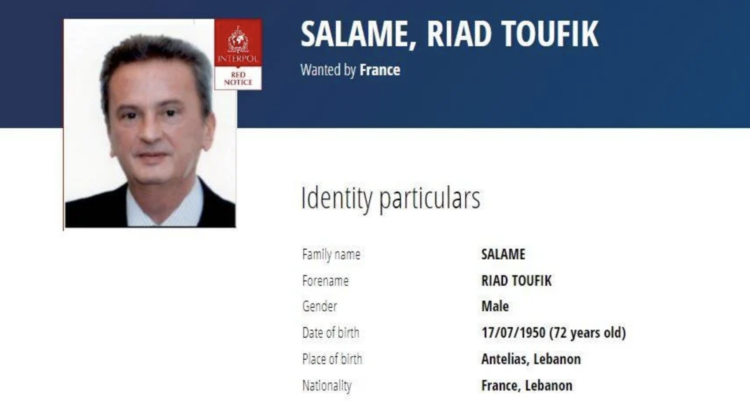
Interpol primarily acts as a facilitator in the issuance of international arrest warrants. When a member country issues a request for the arrest of an individual, Interpol can help disseminate this information through its global database, known as the “Red Notice.” A Red Notice is not an international arrest warrant but a request to law enforcement agencies worldwide to locate and provisionally arrest the wanted person pending extradition. The decision to arrest rests with the individual countries, as they are not legally obliged to comply with a Red Notice.
Types of Interpol Notices
Interpol issues several types of notices, which serve different purposes in international policing:
Red Notice: Requests the location and detention of a wanted person; it is not an arrest warrant.
Blue Notice: Collects additional information about a person’s identity or activities in relation to a crime.
Green Notice: Warns about a person’s criminal activities when it poses a potential threat to public safety.
Black Notice: Seeks information on unidentified bodies.
The Legal Framework for International Arrest Warrants
The legal basis for international arrest warrants lies in treaties such as the United Nations Convention against Transnational Organized Crime and various bilateral extradition treaties. These agreements define the conditions under which countries can request and execute warrants. Countries may refuse to honor a request based on various grounds, including lack of dual criminality (the principle that an act must be a crime in both jurisdictions) or political motivations behind the charges.
Challenges and Limitations
While Interpol’s Red Notices provide a framework for international cooperation, there are inherent challenges and limitations. One significant challenge is the political abuse of Red Notices. Some countries have been accused of using Interpol notices to target political dissidents or opponents. As a result, Interpol has put in place measures to review requests for compliance with its rules and regulations concerning human rights.
Another limitation is the varying legal standards among member countries. The enforcement of a Red Notice depends on the local laws and the willingness of a state to detain the suspect. This inconsistency can lead to discrepancies in how international fugitives are treated, making it crucial for legal entities to understand these differences.
The Extradition Process
Once a suspect is located following a Red Notice, the extradition process begins. The arrested individual can contest the extradition in court, and the final decision lies with the judicial system of the country where the arrest took place. Extradition proceedings can be protracted and complex, often involving diplomatic negotiations between countries.
Recent Developments in Interpol Regulations
In response to concerns over the misuse of arrest warrants, Interpol has taken steps to enhance its oversight of notice requests. The introduction of an independent commission to review notices and assess their compliance with human rights standards represents a significant development. This move aims to bolster the integrity of Interpol’s processes and ensure that Red Notices are used appropriately.
Conclusion
Interpol serves as a crucial link in the international law enforcement chain, providing the framework for collaboration and information sharing among member countries. While international arrest warrants—primarily conveyed through Red Notices—offer the potential for apprehending fugitives, they are not without challenges. The complexities surrounding political abuse, legal discrepancies, and the extradition process necessitate a careful and informed approach to international justice. As global crime continues to evolve, the role of Interpol and its mechanisms for issuing international arrest warrants will remain critical in maintaining the rule of law across borders.